
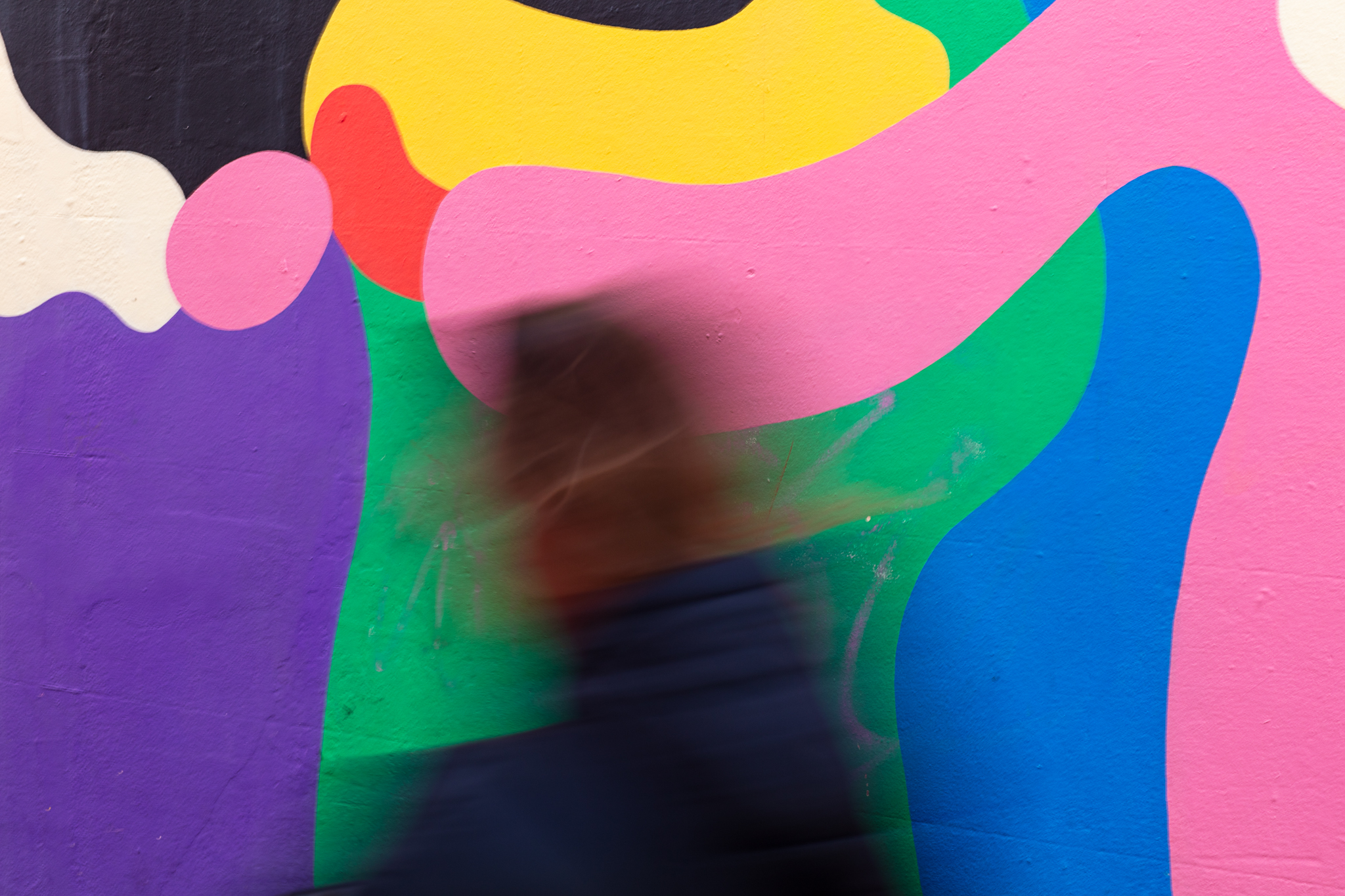
I tend to pay a lot of attention to backgrounds in my photography, which is difficult with street photography, where you can’t control all the elements in a scene, especially if you’re moving quickly. Sometimes I find a great background and I know I want that to be an important compositional part of the image I have in my mind. So, I wait. It might be colourful street art or a billboard that will form the backdrop for the image, or even something quirky. It’s often a question of trusting your instincts, going with your intuition.
This is known as fishing, as opposed to hunting for a shot on the move. Instead, I’ll stop and work a scene, waiting for the elements to come together. This is often as people come into frame, but with an eye on great light or other interesting elements I want to include. It is more about pre-visualising what I want and then it’s a waiting game.
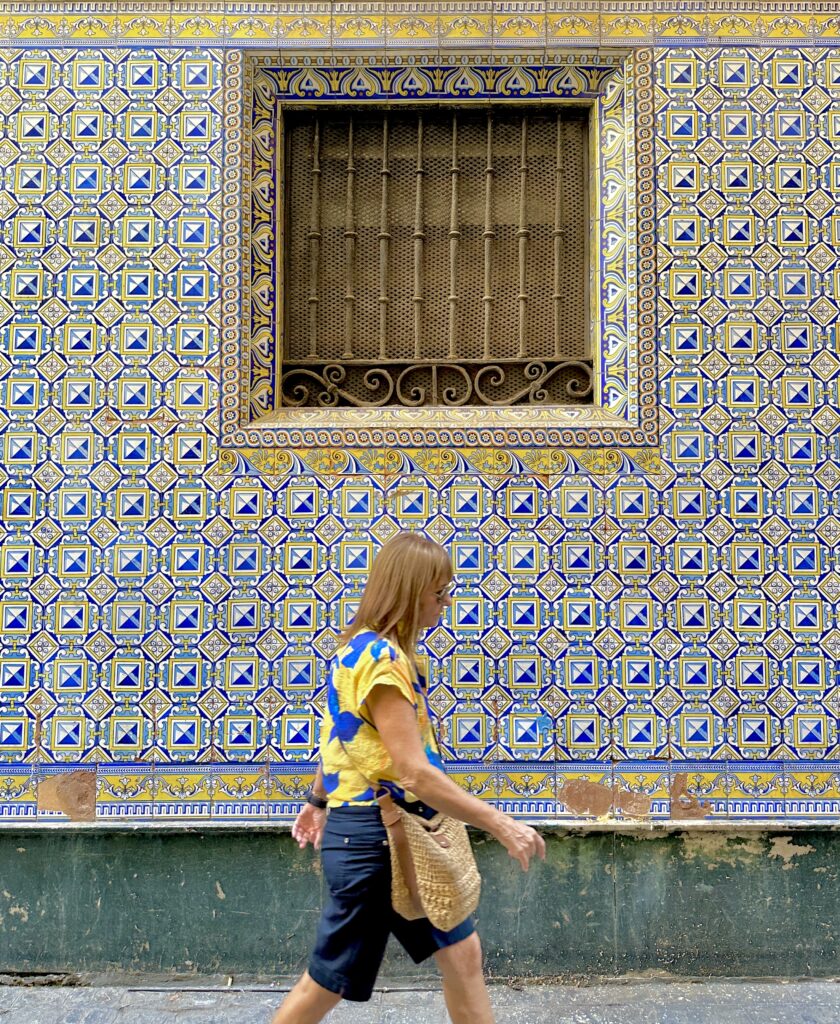
This is exactly what I did with the image below. I loved the symmetry of the image, the repetition and colours of the tiles on the building exterior in Cadiz really drew me in. I just needed that extra something to lift the entire composition. Normally, you might wait for quite a while to find that extra something, but I was fortunate that someone walked into frame wearing blue and yellow to complement the tiles behind. It all happened quickly. I saw the colours and the person walking into frame and I managed to get one image.
Benefits of Fishing
I feel like this technique or approach to street photography has several benefits which are easily overlooked. For me, they include:
- Composition – you can be intentional about who or what you include
- Slowness – it’s good to slow down, breathe and realise a scene’s potential
- Control – you can choose the best lighting or elements to bring your vision to life
- Fear – somehow there is less fear and anxiety when waiting in one place
Ultimately, there is room for both hunting for images and working one scene or composition. There are no hard and fast rules, which is one of the best parts of being on the streets with your camera. Blending both techniques into your street photography practice can only be a good thing.
I would love to hear what you think about this technique. Is it something you do already, or feel like you would do more often? Let me know in the comments below.
